

 English
 Deutsch
 русский
Industry News
Mini Trampolines: Health Benefits, Buying Tips & Workout Guide
Content
A 1980 NASA study found that rebounding on a mini trampoline is 68% more efficient than jogging — same cardiovascular demand, far less stress on your joints. That single data point quietly changed how fitness professionals think about low-impact exercise. If you've been dismissing mini trampolines as a kids' toy, this guide will change your mind.
What Makes Mini Trampolines Different From Regular Exercise
Every bounce on a rebounder puts your body through three distinct phases: acceleration upward, a brief moment of near-weightlessness at the peak, and deceleration as you land. That gravity cycle is unique. No treadmill, stationary bike, or elliptical replicates it.
The elastic surface absorbs roughly 80% of the impact that would otherwise travel through your ankles, knees, and hips. The result: you can sustain a vigorous cardio session even with joint pain, post-injury limitations, or conditions like arthritis. Research published in the Arthritis Foundation journal confirms that trampoline exercise delivers measurable improvements in endurance, balance, and coordination that other low-impact alternatives simply don't match.
For fitness-focused adults, indoor and outdoor fitness mini trampolines offer a compact, versatile platform that works year-round, in any room with adequate ceiling clearance.
5 Evidence-Backed Health Benefits
1. Cardiovascular health. Rebounding elevates heart rate efficiently without the high-impact punishment of running. The American Heart Association recommends 150 minutes of moderate aerobic activity per week — a daily 20-minute rebound session covers that comfortably.
2. Bone density. The NASA study originally examined astronauts recovering bone mass lost in zero gravity. The controlled gravitational loading of rebounding stimulates osteoblast activity, making it one of the few low-impact exercises that actively strengthens bones. A randomized controlled trial showed significant hip bone density gains in adults with osteopenia after just 12 weeks of trampoline training.
3. Lymphatic circulation. Unlike the cardiovascular system, the lymphatic system has no pump — it relies on muscular movement and gravity changes. The up-down rhythm of rebounding is unusually effective at stimulating lymph flow, which supports immune function and helps the body clear metabolic waste.
4. Balance and coordination. Landing on an unstable surface forces your proprioceptive system (the network of sensors that tracks your body in space) to work continuously. Studies on neurological rehabilitation confirm that mini trampoline exercise measurably improves balance metrics, an especially valuable benefit for older adults concerned about fall risk.
5. Mood and stress relief. Rhythmic, repetitive movement is inherently calming. The endorphin release from even 10 minutes of bouncing is comparable to a longer run — with evidence suggesting positive effects on anxiety symptoms and overall mood.
How to Choose the Right Mini Trampoline
The market offers a wide range, and the differences matter more than most buyers realize.
Suspension type: springs vs. bungee cords. Metal springs provide firm, high bounce — better for intense workout routines. Bungee cord systems offer a softer, quieter landing, ideal for indoor use and joint-sensitive users. Most fitness professionals now recommend bungee-based rebounders for adult fitness. If noise is a concern (apartment living, shared floors), this is the deciding factor.
Size. Standard adult rebounders range from 32 to 48 inches in diameter. A 38–40 inch surface covers most exercises comfortably. The 55-inch mini trampoline offers a larger jumping area suited to dynamic lateral movements, jumping jacks, and users who want extra stability.
Weight capacity. Check the manufacturer's rating carefully. Quality rebounders are rated for 250–400 lbs. Exceeding capacity degrades both the bounce and the structural integrity over time.
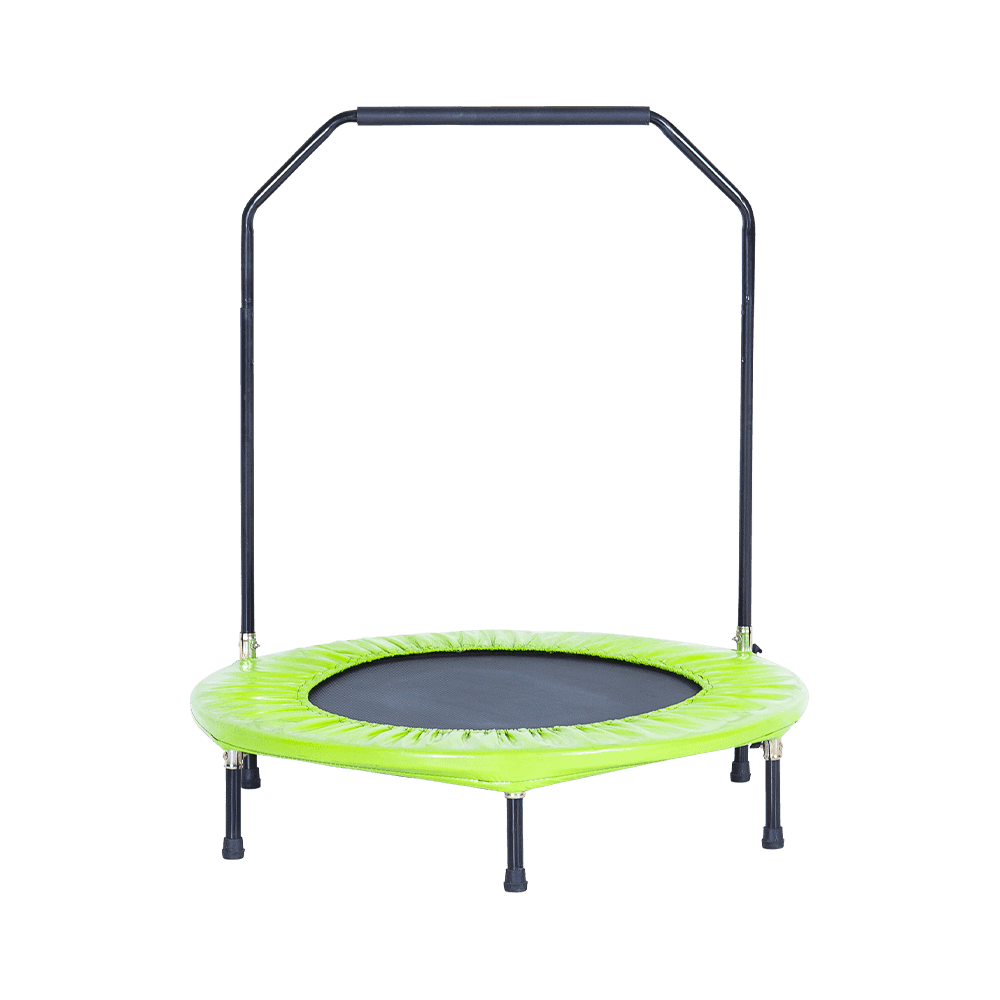
Handlebar. Optional on most models, but worth considering if you're a beginner, older adult, or rehabilitating an injury. An adjustable handlebar mini trampoline adds lateral stability without limiting your range of motion.
Storage. If floor space is limited, look for a foldable frame. A foldable mini trampoline collapses flat and slides under a bed or behind a door — no dedicated storage space needed.
Frame and mat quality. Galvanized or powder-coated steel resists rust. The jumping mat should be PP (polypropylene) mesh, which holds tension consistently and resists UV degradation if used outdoors.
4 Beginner Exercises to Start Today
You don't need a complex routine. These four movements cover cardio, core, and balance in under 20 minutes.
- Health Bounce (3 min warm-up): Stand with feet hip-width apart. Gently bounce without leaving the mat — just enough to feel the surface flex. This activates lymphatic flow and warms the joints.
- Jogging in Place (5 min): Lift alternating knees to hip height while pumping arms. Maintain an upright posture. This is the core cardio move — increase intensity by speeding up or raising your knees higher.
- High Knees (3 sets × 30 seconds): Drive knees toward chest with each bounce. Engages hip flexors, core, and quads simultaneously. Rest 20 seconds between sets.
- Lateral Shuffle (2 min): Step side-to-side on the mat in a low squat position. Builds hip stability and inner-thigh strength while improving lateral coordination.
Start with 15 minutes total, three times per week. Most people notice improved energy and sleep quality within the first week. Progress to 20–30 minute sessions as your endurance builds.
Safety: What to Check Before You Bounce
Place the rebounder on a flat, non-slip surface. If you're on hardwood or tile, rubber feet (included on most models) are essential — or check out guidance on preventing mini trampolines from sliding on hard floors. Inspect the mat and suspension before each session. Wear supportive, flat-soled shoes or jump barefoot — thick-soled running shoes reduce tactile feedback and can alter landing mechanics. Keep 3 feet of clearance on all sides and adequate ceiling height (at least 8 feet for adults). One person at a time; mini trampolines are not designed for multi-user bouncing.
For those managing joint conditions, consult a physical therapist before starting. The low-impact nature of rebounding makes it suitable for most people, but individual factors — prior surgeries, osteoporosis severity, inner ear conditions — warrant professional input.
The Bottom-Line Assessment
Mini trampolines deliver a rare combination: they're cardiovascularly demanding, gentle on joints, space-efficient, and genuinely enjoyable. The science behind rebounding is solid — backed by NASA research, controlled clinical trials, and rehabilitation studies. The barrier to entry is low: a quality rebounder costs less than two months of gym membership, fits in any room, and requires zero commute.
If you've been looking for a sustainable home workout that doesn't feel like a chore, this is a strong place to start. Explore the full mini trampoline range to find the right fit for your space, fitness goals, and budget.
 Previous
Product Consultation
Search
Categories
Recent Posts
If you have any questions, please fill out the contact form at the bottom of the page and contact us.
Related products

Anhui Qidi Fitness Equipment Co., Ltd.
Quick Links
Contact Details
Tel: 0086-563-4676999
Fax: 0086-563-4676999
Mobile:086-15158243539
Email: [email protected]
Address: Dongpo Industrial Area, Zhongxi Town, Ningguo City, Anhui Province China
Come and Contact Us
You are welcome to contact us at any time, we value your feedback and suggestions.
