
 English
 Deutsch
 русский
Industry News
Home / Blogs / Industry News / Mini Trampolines: The Complete Buyer's Guide to Fitness, Safety, and Quality
Content
Buying a mini trampoline is not a complicated purchase once you know what separates a durable model from a frustrating one. The short version first: prioritize frame construction, bounce mechanism, mat quality, and safety certification. Those four factors matter more than brand name, color, or a low price tag.
Market prices span from compact rebounders at under fifty dollars to trainer-grade models costing several hundred dollars, and the difference is almost always in the hardware, not the marketing. This guide is written from the production side: what a trampoline factory actually tests and checks before shipping a mini trampoline to a supermarket or a fitness retailer.
Mini trampolines fall into two practical groups: compact rebounders in the 33-40 inch range and larger 55-inch models. Compact rebounders are built for light cardio, balance training, and recovery work, with a jumping surface that encourages shorter, controlled bounces. The 55-inch mini trampoline is the crossover category. It keeps a footprint that fits into a home corner while offering a noticeably larger jumping area, which is why it also works well for children's play and family use.
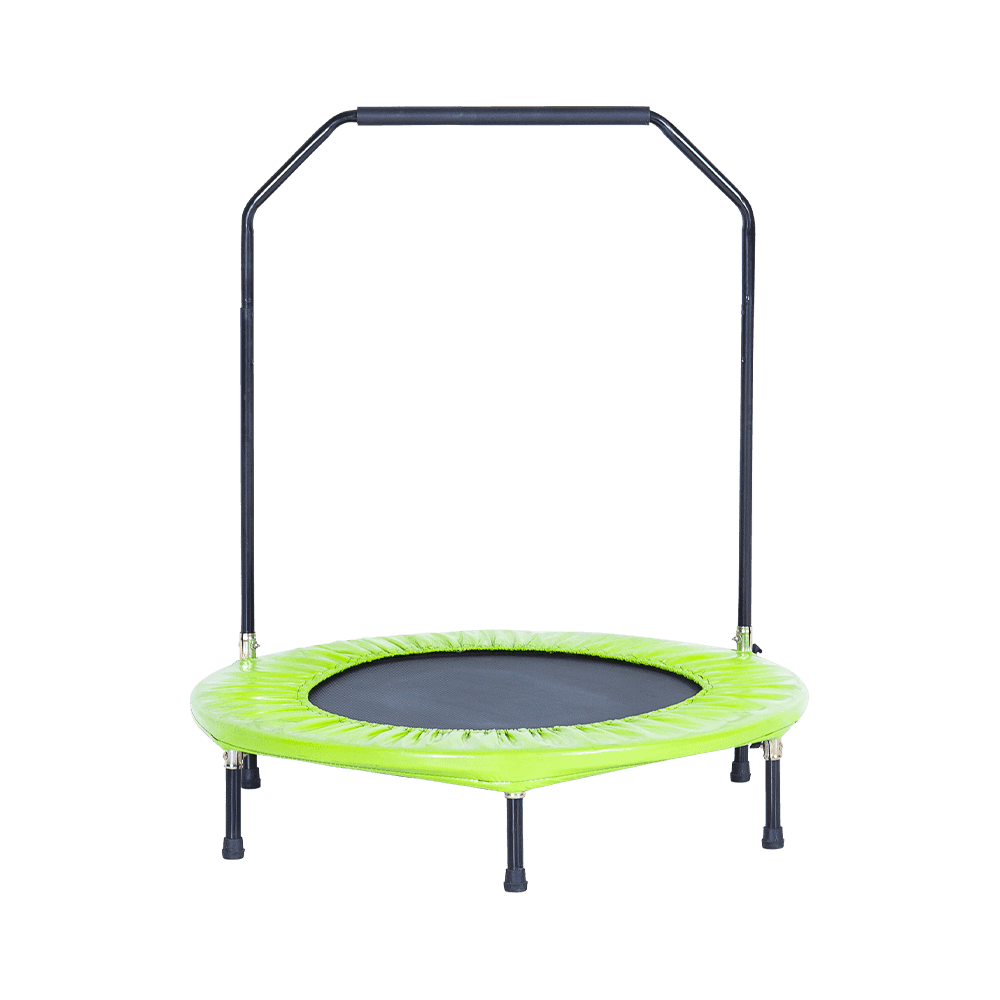
The category includes several structural variations: models with an adjustable handlebar for stability-oriented training, foldable versions for children, springless frames that eliminate coil springs, and cross-welded frames with patterned pads or enclosure nets. We manufacture all of them. You can browse the full mini trampoline lineup to see the range, but the practical difference comes down to where and how you intend to use it.
Regular mini trampoline sessions improve cardiovascular endurance, balance, and coordination. Because the mat absorbs part of every landing, rebound exercise is gentler on joints than running on pavement, which makes it practical for people with joint sensitivity, older adults, and anyone easing back into fitness after a break.
For weight loss, mini trampoline training produces steady calorie burn. A person weighing about 68 kg can expect to burn roughly 200-300 calories during 30 minutes of continuous bouncing, depending on intensity and technique. We cover the topic in more depth in a separate analysis of the evidence on mini trampolines and weight loss, including specific exercise sequences that keep the intensity high without straining the knees.
Rehabilitation and balance programs also use mini trampolines to rebuild proprioception and core stability. A handlebar version gives an untrained user a fixed support point during the first weeks, which shortens the learning curve and reduces the fear of stepping onto a moving surface.
Everything on a mini trampoline can be reduced to four components: frame, mat, bounce mechanism, and safety padding. If all four meet the right standards, the trampoline will perform reliably for years; if one is weak, the whole assembly will feel it.
A galvanized steel frame with a rust-resistant finish is the baseline for any model that might see outdoor use or humid storage. Check how the frame is joined: cross-welded connection points handle repeated landings better than designs that rely on plastic brackets. The jumping mat should be UV-resistant polypropylene. Mats without UV stabilization lose elasticity and can fray after a single season in the sun, so this detail directly determines how long the trampoline stays usable.
Spring-based trampolines give a livelier bounce, and the number, gauge, and length of the springs determine the feel. Springless designs replace coil springs with fiberglass rods or elastic bands. Removing the coils eliminates pinch points, reduces noise, and cuts down the number of parts that need to be inspected or replaced. That is why springless models have become a common choice for indoor spaces. The square springless mini trampoline is the version we recommend for customers whose main priority is a quiet, low-maintenance bounce.
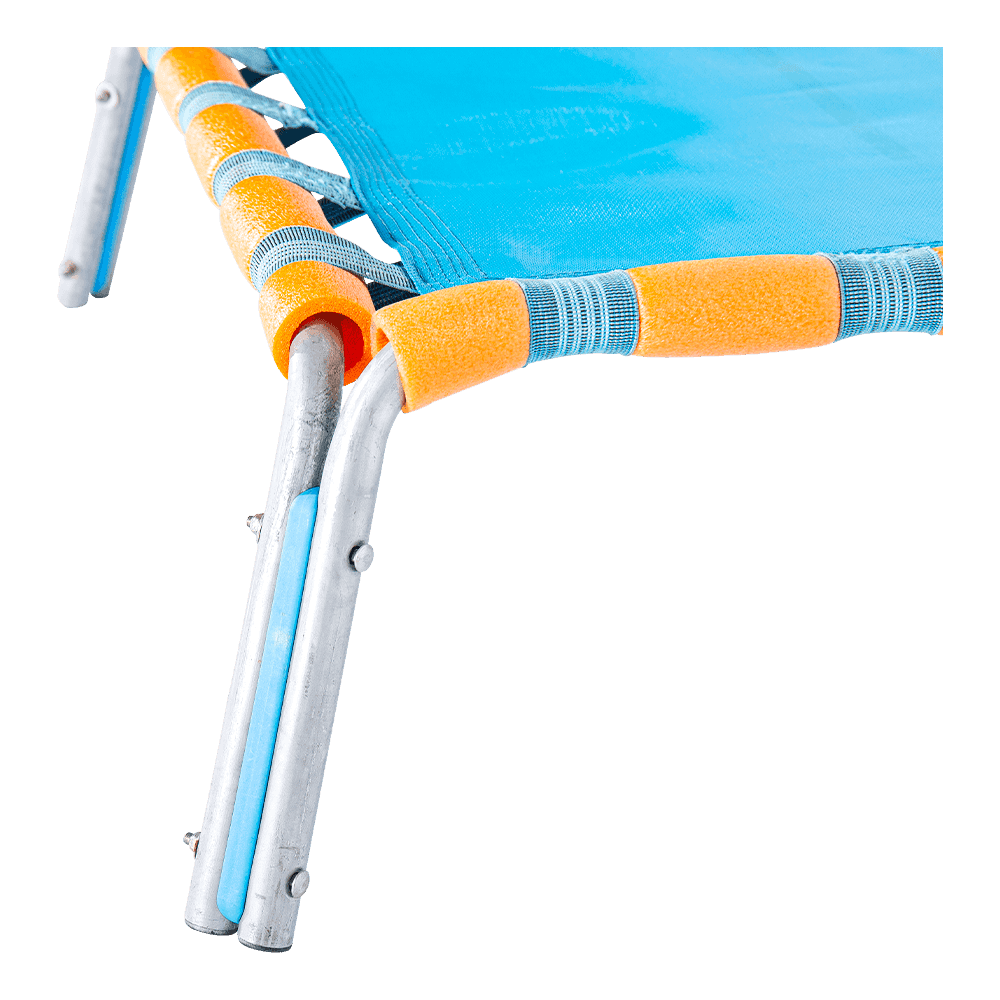 Wholesale Square Springless Mini Trampolines Suppliers, Company - Anhui Qidi FitAnhui Qidi Fitness Equipment Co., Ltd is China Square Springless Mini Trampoline Suppliers and wholesale Square Springless Mini Trampolin...View Product →
The frame pad must cover the full perimeter, including every spring and connection point. On children's models, an enclosure net is strongly recommended if the trampoline is used without direct supervision. For balance training, a handlebar is a load-bearing component, not a convenience: it needs rigid attachment points and a stable base. Our adjustable-handle mini trampoline uses a reinforced handlebar mount precisely for that reason.
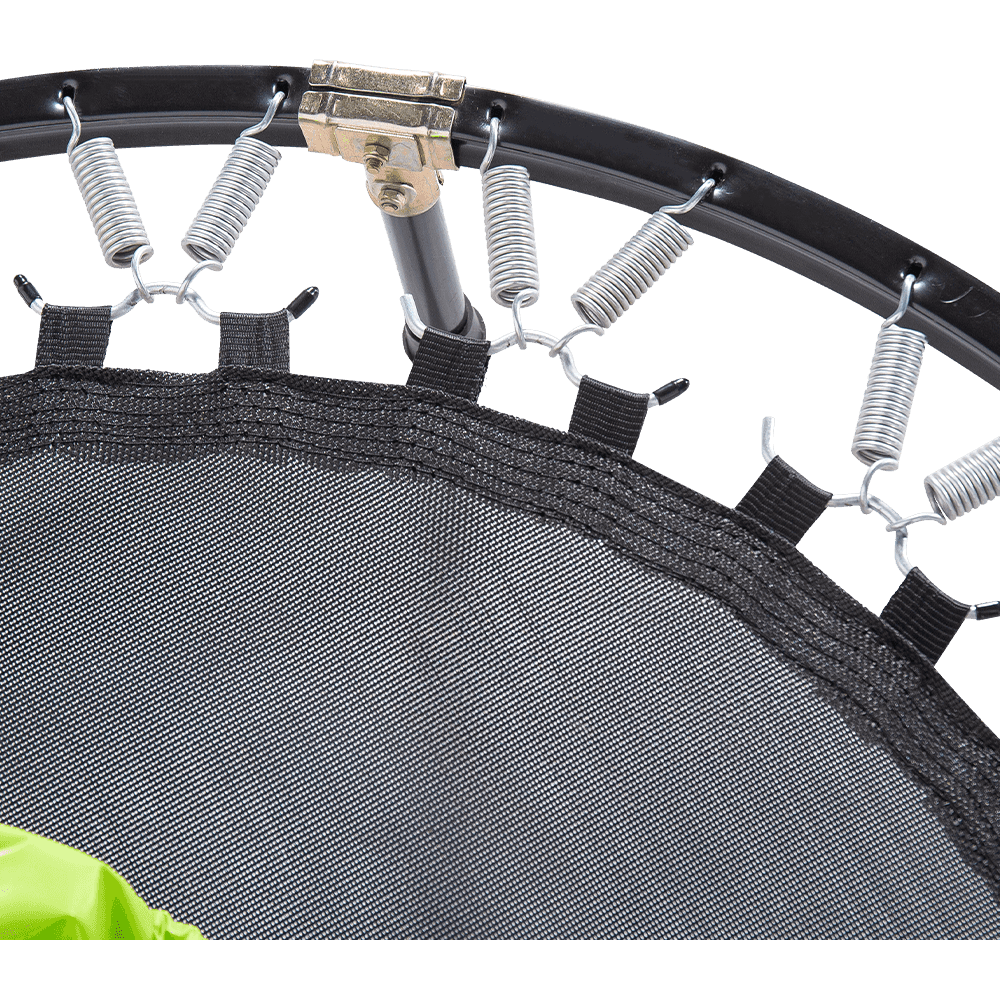 Wholesale Adjustable Handle Mini Trampolines Suppliers, Company - Anhui Qidi FitAnhui Qidi Fitness Equipment Co., Ltd is China Adjustable Handle Mini Trampoline Suppliers and wholesale Adjustable Handle Mini Trampolin...View Product →
Certification tells you whether the factory has been audited to a recognized standard. For the European market, look for GS, EC type approval, EN71, REACH, and EN13219. EN71 covers toy safety, REACH restricts hazardous chemicals, and EN13219 is the trampoline-specific standard. A manufacturer that lists these certificates publicly is a much safer procurement choice than one that only mentions them after the order.
The table below summarizes the main configurations available in the mini trampoline category, so you can match the model to the user and the space.
| Configuration | Primary Use | What to Check |
|---|---|---|
| Compact rebounder, spring-based | Light cardio, balance training, recovery | Spring count and gauge, foldability, pad thickness |
| Compact rebounder, springless | Quiet indoor workouts, low maintenance | Rod material, noise level, frame stability |
| Fitness mini trampoline | Adult daily cardio, small spaces | Base width, mat quality, non-slip feet |
| 55-inch mini trampoline | Adult fitness and children's play | Cross-welded frame, optional enclosure net, larger mat |
| Children's foldable model | Young kids, easy storage | Weight limit, folding latch, full-perimeter padding |
If the primary user is an adult doing daily cardio, choose a fitness-oriented frame with a wider base and a heavier mat. If space is tight, folding models help, but a foldable child-sized unit is not a substitute for a full adult training deck. We developed the fitness mini trampoline designed for both indoor and outdoor sessions to close that gap: it offers a sturdier platform and a non-slip base without the footprint of a full-size outdoor trampoline.
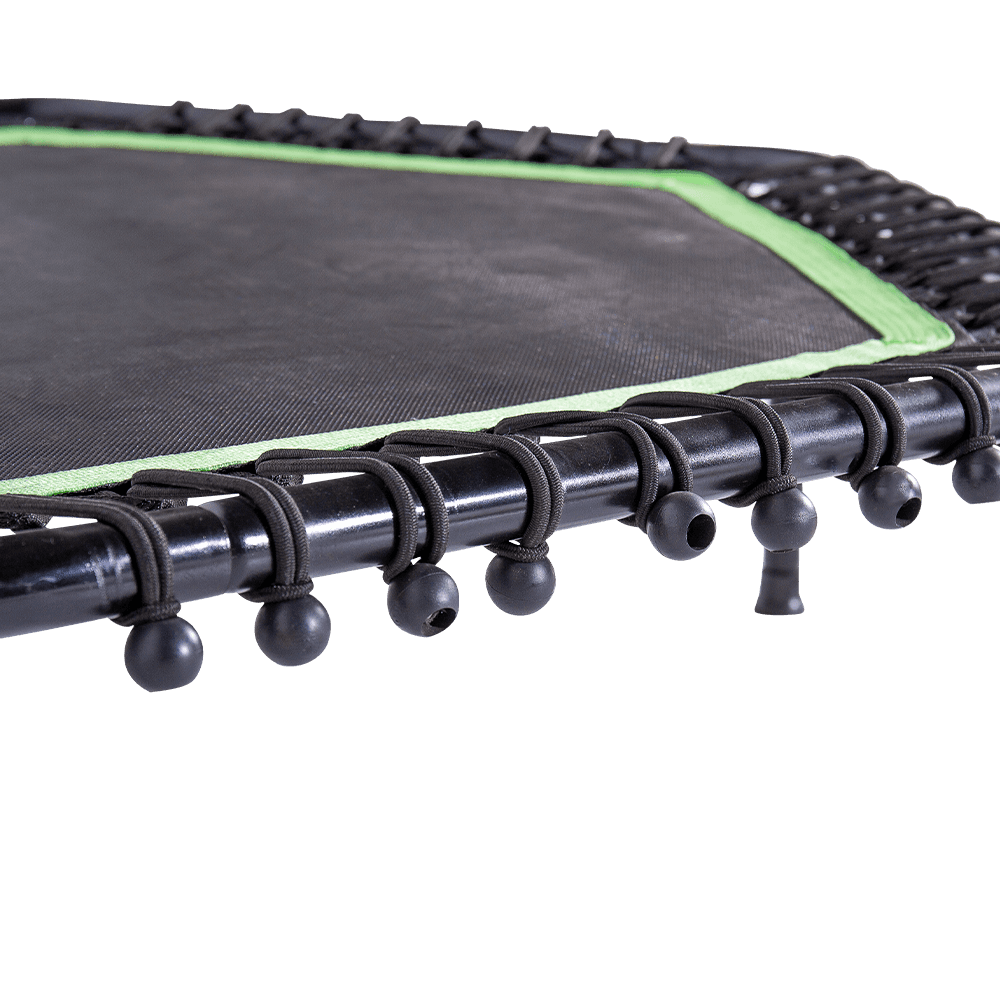 Wholesale Fitness Mini Trampolines For Indoors And Outdoors Suppliers, Company -Anhui Qidi Fitness Equipment Co., Ltd is China Fitness Mini Trampoline For Indoors And Outdoors Suppliers and wholesale Fitness Mini Tram...View Product →
Before confirming any order, run this quick checklist:
The environment determines your frame and mat requirements. Indoor use favors a quieter, lower-profile model that does not slide on hard floors. Outdoor use demands rust resistance and, on open installations, wind anchorage. On a hard floor, sliding is the most common complaint with cheaper mini trampolines; a non-slip base or rubber feet are not optional extras for safety-aware buyers.
For outdoor placement, choose level, firm ground and keep the trampoline away from sharp objects. Cleaning is simple: wipe the mat with mild soap and water, keep the frame pad dry, and inspect the padding and stitching every few weeks. Regular cleaning does more for durability than a more expensive model with neglected maintenance.
Mini trampolines are sold at wildly different price points, and the underlying production source explains a large part of that difference. Anhui Qidi Fitness Equipment has spent more than a decade building trampolines, employs over 60 people, and produces between 100,000 and 200,000 units a year for export to overseas supermarkets. That scale creates two practical results: batch consistency and audited quality control. You can read about our factory background, including the welding, assembly, and testing lines that stabilize the production process.
For retailers, importers, and fitness brands, a manufacturer with certified production capability makes a product line sustainable. For individual buyers, the same factory background usually means accurate specifications, proper documentation, and better access to replacement parts. When the same factory also produces 55-inch mini trampolines, round, rectangle, and polygonal models, the engineering knowledge carries over across the whole range.
Evaluate a mini trampoline the way a procurement manager evaluates a supplier: check the certification, verify the frame and mat materials, confirm the weight capacity, and then compare prices. A certified 55-inch model with a galvanized frame, UV-resistant mat, and full-perimeter padding will outlast several cheaper alternatives and provide a safer workout the entire time.
Start by measuring the space you have, decide between a compact rebounder and a 55-inch model, and then compare spring and springless options side by side. The right mini trampoline is not the most expensive one on the shelf; it is the one whose materials and certifications match the way you actually plan to use it.
If you have any questions, please fill out the contact form at the bottom of the page and contact us.

Anhui Qidi Fitness Equipment Co., Ltd.
Tel: 0086-563-4676999
Fax: 0086-563-4676999
Mobile:086-15158243539
Email: [email protected]
Address: Dongpo Industrial Area, Zhongxi Town, Ningguo City, Anhui Province China
You are welcome to contact us at any time, we value your feedback and suggestions.