
 English
 Deutsch
 русский
Industry News
Home / Blogs / Industry News / Round Trampoline Sizes Explained: 8ft, 10ft, 12ft & 14ft Buying Guide
Content
Most people pick a trampoline size the wrong way — they walk into a store, see a 12ft model, and think "that looks about right." Three months later it's either crowded with kids bouncing off each other, or sitting in a yard too small to safely fit it. Size is the single decision that shapes everything else: safety, usability, and how long the trampoline stays fun as your kids grow.
This guide cuts through the noise. Below you'll find a direct comparison of the four most popular backyard sizes — 8ft, 10ft, 12ft, and 14ft — with clear guidance on who each one is actually built for.
Round trampolines are the world's most popular outdoor trampoline shape, and for good reason. Their spring layout redirects jumpers naturally toward the center of the mat, which reduces the chance of drifting toward the frame or enclosure net. This self-centering effect is especially valuable for children, making round designs the safer default for family use.
They also fit standard backyard shapes better than rectangular models and are easier to anchor symmetrically. Quality round trampolines from certified manufacturers — built to standards like GS, EN71, REACH, and EN13219 — provide a bounce surface that's both consistent and durable across thousands of hours of use.
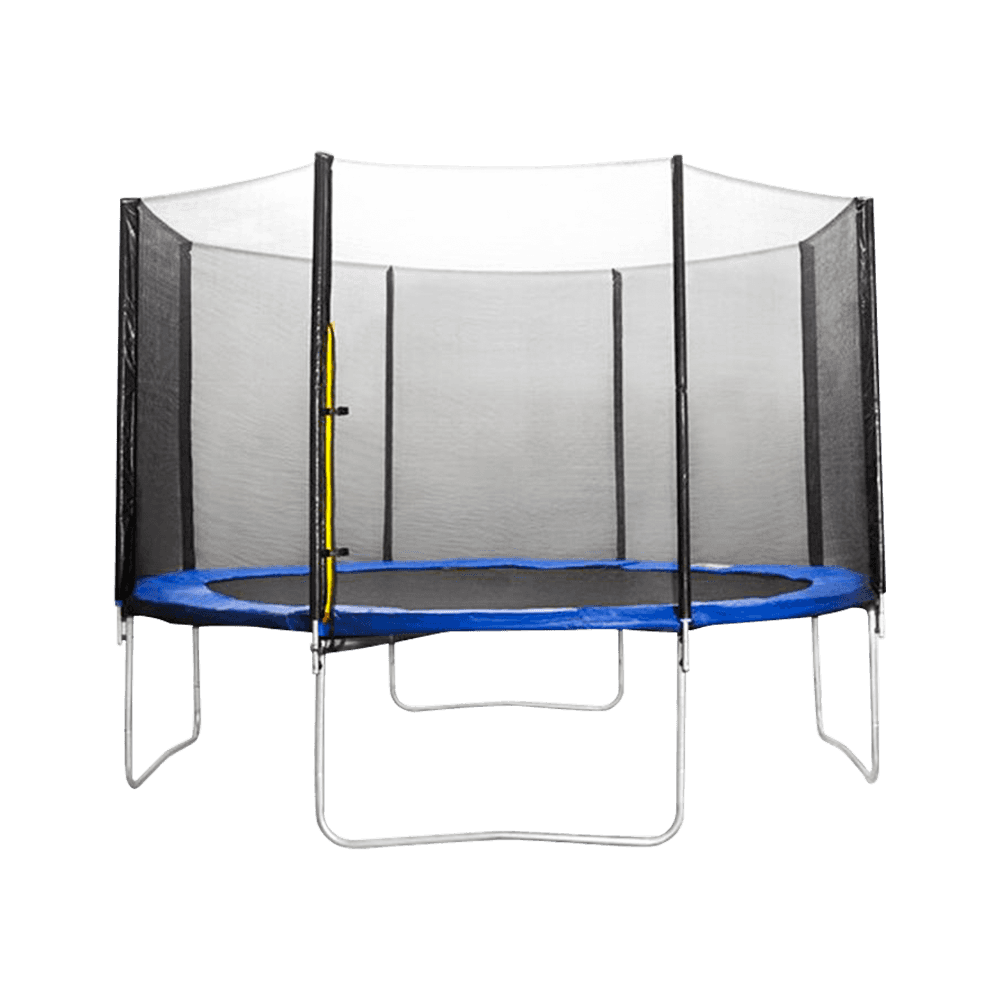
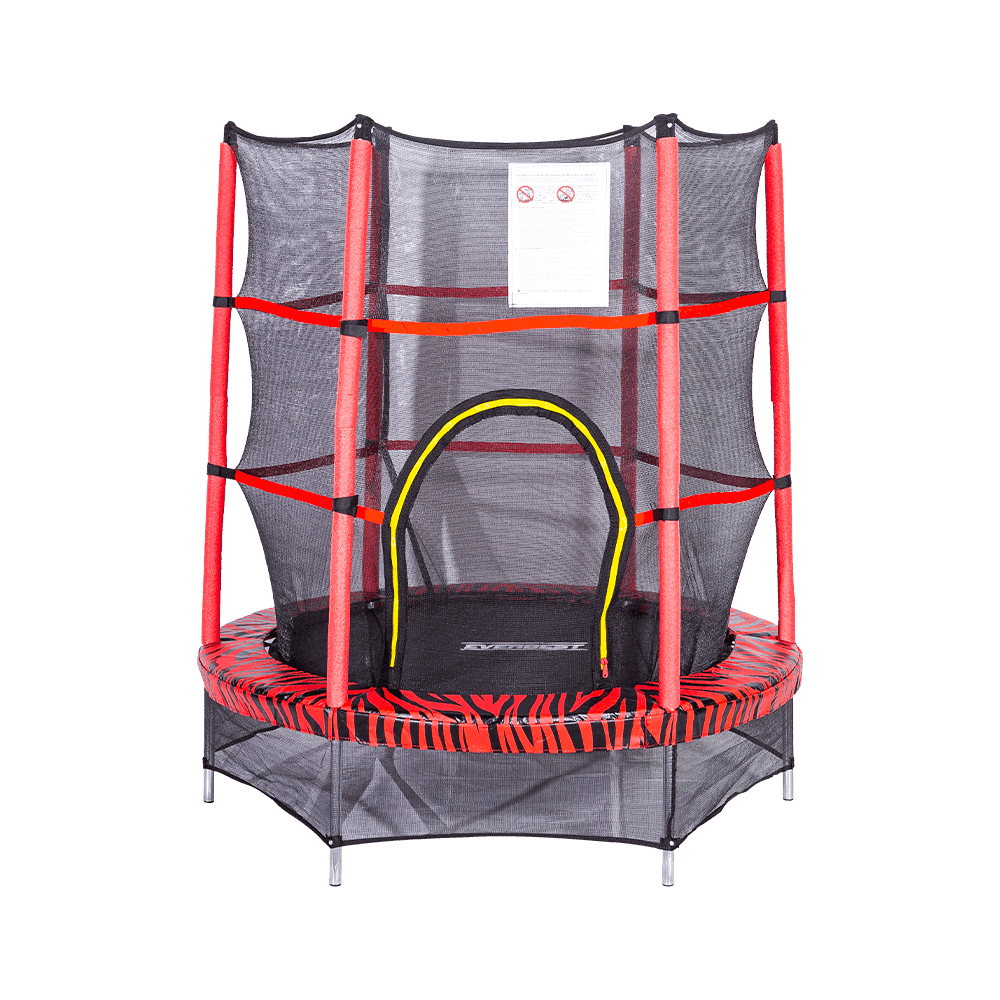
8ft round trampolines are the right call for small yards, young children (ages 3–7), and buyers who prioritize footprint over bounce space. The actual jumping mat on an 8ft trampoline measures roughly 6ft across once you subtract spring and pad width — enough for solo play but tight for two kids. These models work well with a straight enclosure net and a basic ladder.
If your yard has less than 15ft of clear diameter (including the 3–5ft safety clearance buffer recommended around every trampoline), the 8ft is your practical upper limit. It's also the easiest to move, store, or pass along when kids outgrow it.
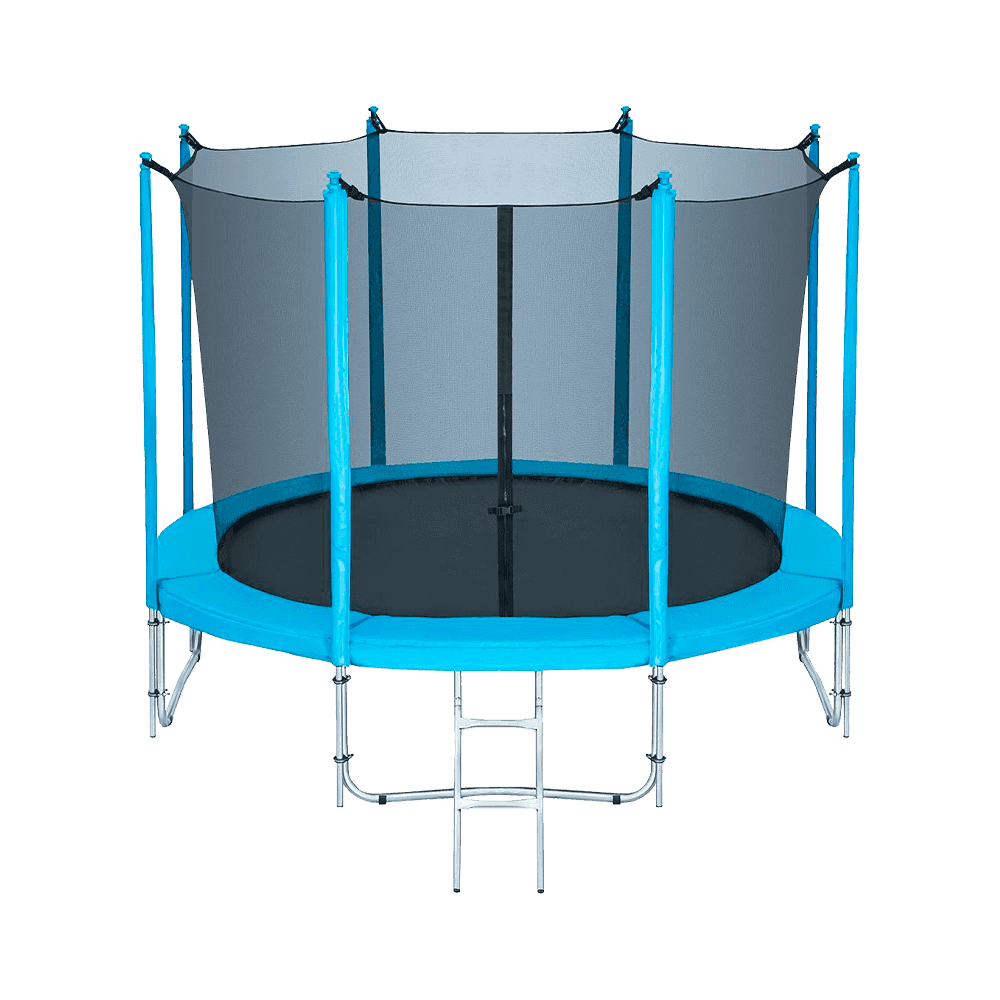
The 10ft round trampolines hit the sweet spot between space efficiency and usable bounce area. A 10ft frame delivers roughly 8ft of actual jumping surface — around 50 square feet — which comfortably handles one jumper at a time with full freedom of movement. It suits children aged 6–12 and works well with fiberglass enclosure rod systems that flex on impact rather than bending.
For families with a mid-size yard (roughly 16–18ft of clear space), the 10ft model provides years of use before kids start to feel cramped. Models that include a ground-to-tube straight enclosure design add extra stability for active jumping sessions.
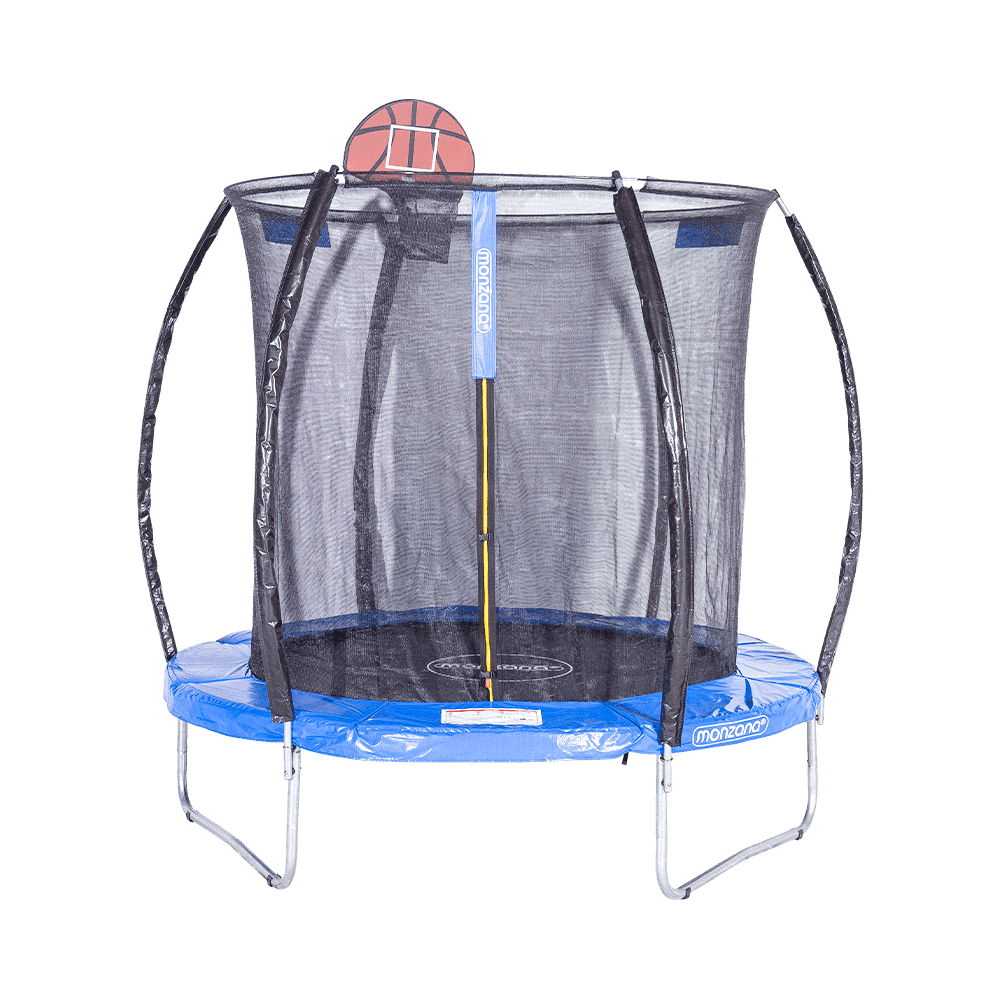
12ft round trampolines are the most-purchased size among families with school-age children, and with good reason. A 12ft frame translates to roughly 10ft of actual jumping mat — approximately 86 to 93 square feet of usable surface. That's enough for older children and teenagers to bounce freely, and it supports accessories like a basketball hoop without feeling overcrowded.
U-clamp connector systems on inside-net models provide additional structural rigidity at this size, keeping the enclosure net taut and eliminating the flex gaps that appear on cheaper enclosure poles over time. Plan for at least 18–20ft of clear yard space when siting a 12ft model.
A 14ft round trampoline delivers roughly 12ft of jumping mat and between 122 and 130 square feet of bounce surface — about 40% more than a 12ft model. That extra real estate matters more than it sounds: jumpers naturally drift during active play, and a wider canvas keeps them well away from the frame and enclosure poles.
The 14ft is the right choice for families with multiple children, active teenagers, or anyone who wants a trampoline that remains genuinely fun through high school. Models with pumpkin-shaped frames and integrated basketball hoops take full advantage of the size. You'll need at least 20–22ft of clear surrounding space for safe placement.
Size is only part of the equation. According to pediatric safety guidance from the American Academy of Pediatrics, the majority of trampoline injuries happen with multiple simultaneous jumpers and when protective padding is worn or improperly placed. The structural features of the trampoline itself play a major role in preventing these situations.
Look for the following on any model you're considering:
| Frame Size | Approx. Jump Surface | Clearance Needed | Best For |
|---|---|---|---|
| 8ft | ~6ft / ~28 sq ft | 14–15ft diameter | Ages 3–7, small yards |
| 10ft | ~8ft / ~50 sq ft | 16–18ft diameter | Ages 6–12, mid-size yards |
| 12ft | ~10ft / ~86–93 sq ft | 18–20ft diameter | Families, teens, accessories |
| 14ft | ~12ft / ~122–130 sq ft | 20–22ft diameter | Multiple jumpers, long-term use |
Measure your yard first — not the trampoline. Mark out the frame diameter plus a 5ft buffer on all sides and see what fits. If two sizes both clear that test, buy the larger one. Kids grow faster than you expect, and stepping down in size almost always means buying again in two or three years.
For most families with a typical suburban backyard, the 12ft or 14ft models deliver the best return over time. If space is genuinely limited, a well-built 10ft with an inside-net enclosure and fiberglass rods will outperform a larger but cheaper model every time.
Explore the full range of round trampolines — from compact 8ft designs to spacious 14ft models — to find the size and configuration that fits your space, your family, and how you actually plan to use it.
If you have any questions, please fill out the contact form at the bottom of the page and contact us.

Anhui Qidi Fitness Equipment Co., Ltd.
Tel: 0086-563-4676999
Fax: 0086-563-4676999
Mobile:086-15158243539
Email: [email protected]
Address: Dongpo Industrial Area, Zhongxi Town, Ningguo City, Anhui Province China
You are welcome to contact us at any time, we value your feedback and suggestions.
 Previous