
 English
 Deutsch
 русский
Industry News
Home / Blogs / Industry News / Mini Trampolines: Low-Impact Workout That Burns More Calories Than Running
Content
A 1980 NASA study published in the Journal of Applied Physiology found that rebounding on a mini trampoline is 68% more efficient than jogging at the same oxygen uptake level — meaning your muscles work significantly harder while your joints take far less impact. That single finding reframed how fitness researchers think about low-impact cardio, and it's why rebounding has made a sustained comeback among home fitness enthusiasts and rehabilitation specialists alike.
If you've been writing off mini trampolines as a kids' toy, this article will change your mind.
Every time you bounce, your body experiences a brief cycle of acceleration and deceleration under increased gravitational load. This engages muscle groups throughout your entire body — calves, core, glutes, and back — simultaneously. Unlike running, where roughly 75% of impact is absorbed by your ankles and knees, the trampoline surface distributes force evenly. The result: a full-body workout with dramatically less joint stress.
Three specific benefits stand out:
Not all mini trampolines are built for the same purpose. Here's how the main variants compare:
| Type | Best For | Key Feature |
|---|---|---|
| Fitness (indoor/outdoor) | Adults focused on cardio & toning | High-elastic mat, compact frame |
| Foldable children's model | Kids, small apartments | Easy storage, lightweight frame |
| Springless square design | Safety-conscious families | No spring pinch risk, quieter bounce |
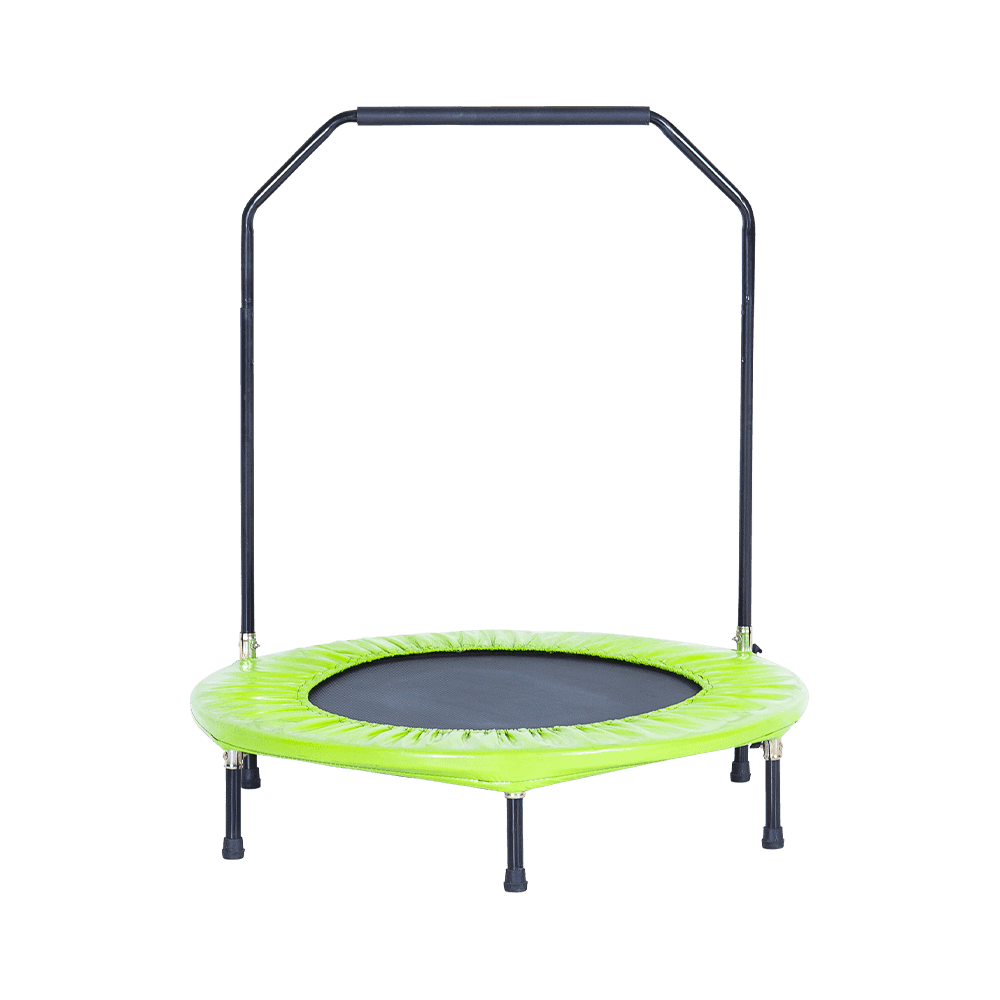
| Adjustable handle model | Beginners, seniors, rehab users | Ergonomic handle, height-adjustable |
If you're just starting out or need extra support during balance training, the adjustable handle model is the clearest choice. The handle adjusts to different heights, making it usable by both children and adults — and its ergonomic grip means you're not gripping a metal bar that fatigues your hands mid-session. For families prioritizing child safety above everything else, the springless square design removes the most common pinch-point injury risk entirely.
Mini trampolines vary widely in quality. These are the non-negotiables:
If you're sourcing for commercial use or want OEM options, look at manufacturers certified to EN13219 specifically — this standard governs fitness trampolines designed for repeated adult use.
You don't need a complex program. These three movements cover cardio, balance, and core activation:
Build sessions progressively: start at 10 minutes daily, add 5 minutes per week until you reach 30-minute sessions. Most users notice improved balance and reduced resting fatigue within 3–4 weeks.
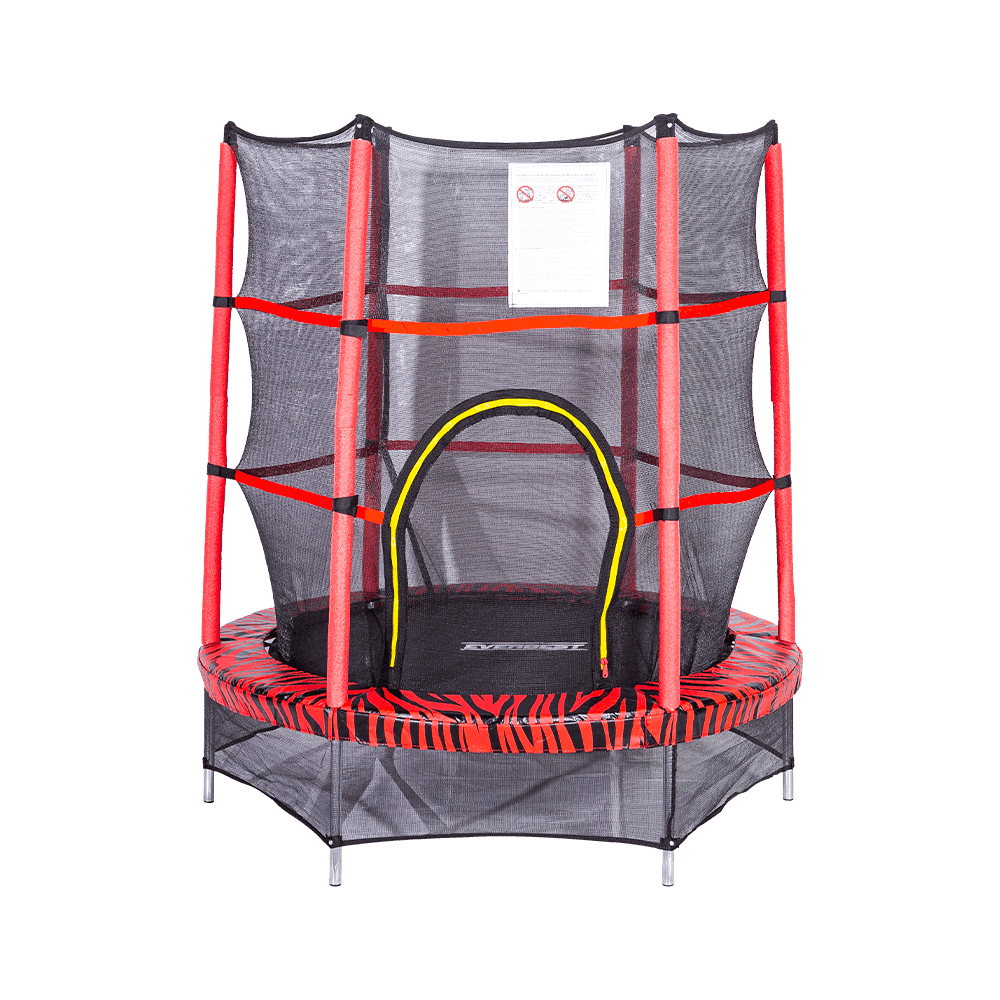
Standard fitness mini trampolines run 36–40 inches in diameter — enough for most aerobic routines. If you need more surface area for wider movement patterns, lateral shuffles, or use by larger adults, 55-inch mini trampolines offer a notably larger jump zone while remaining compact enough for indoor use. The 55-inch format also accommodates optional enclosure nets, which adds a safety margin for children using a trampoline that size.
For reference, a 55-inch mini trampoline fits comfortably in a standard living room and can be stored upright against a wall.
The case for mini trampolines is straightforward: more cardiovascular output per minute, gentler joint load than running, lymphatic benefits you won't get from cycling or swimming, and a form factor that fits any home. The only real variable is choosing the right model for your goals — and now you have the framework to do that.
If you have any questions, please fill out the contact form at the bottom of the page and contact us.

Anhui Qidi Fitness Equipment Co., Ltd.
Tel: 0086-563-4676999
Fax: 0086-563-4676999
Mobile:086-15158243539
Email: [email protected]
Address: Dongpo Industrial Area, Zhongxi Town, Ningguo City, Anhui Province China
You are welcome to contact us at any time, we value your feedback and suggestions.
 Previous