
 English
 Deutsch
 русский
Industry News
Home / Blogs / Industry News / 8ft Polygonal Trampoline With Enclosure: What Makes Polygon Trampolines Different
Content
Most backyard trampolines are round — and that's exactly why polygon trampolines stand out. The octagonal frame isn't just a visual upgrade; it fundamentally changes how a trampoline performs, holds up, and keeps kids safe. If you're weighing options for an 8ft model, here's what actually matters.
A round trampoline concentrates bounce energy toward the center, which sounds fine until you realize that means the edges are significantly weaker. The flat sides of a polygonal frame distribute spring tension more evenly across the entire mat surface. Every jump lands on a more consistent, controlled surface — no soft spots near the perimeter, no unpredictable rebound angles.
For an 8ft trampoline, this matters more than on larger models. Smaller trampolines have less margin for error: a poorly distributed bounce on a round 8-footer can send a child toward the edge faster than they expect. The polygon trampoline design effectively widens the "safe zone" of the jumping surface without increasing the footprint.
The enclosure is not optional — it's the most important safety component on any trampoline under 10ft. Here's a breakdown of the features that separate a well-built unit from a cheap one:
| Feature | What to Look For | Why It Matters |
|---|---|---|
| Enclosure Net Material | High-strength woven polyethylene | Prevents finger injuries on contact; resists tearing |
| Safety Padding | EPE foam, 20–32cm wide, 10–24mm thick, PVC-coated | UV protection + cushioning over spring gaps |
| Frame Construction | Galvanized steel, reinforced joints | Rust resistance for outdoor longevity |
| Safety Certifications | GS, EN71, REACH, EN13219 | Verified compliance with European/international standards |
| Spring Count | Higher count = smoother bounce distribution | Fewer dead zones across the mat surface |
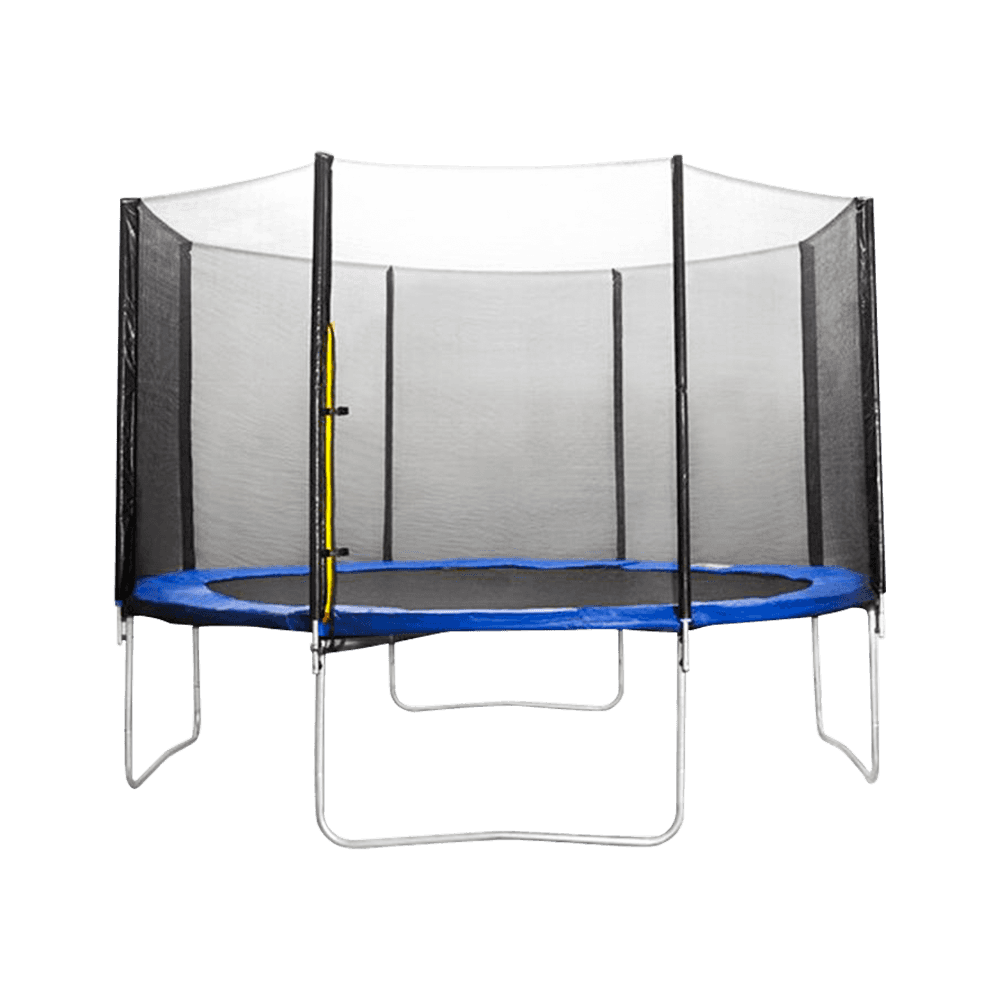
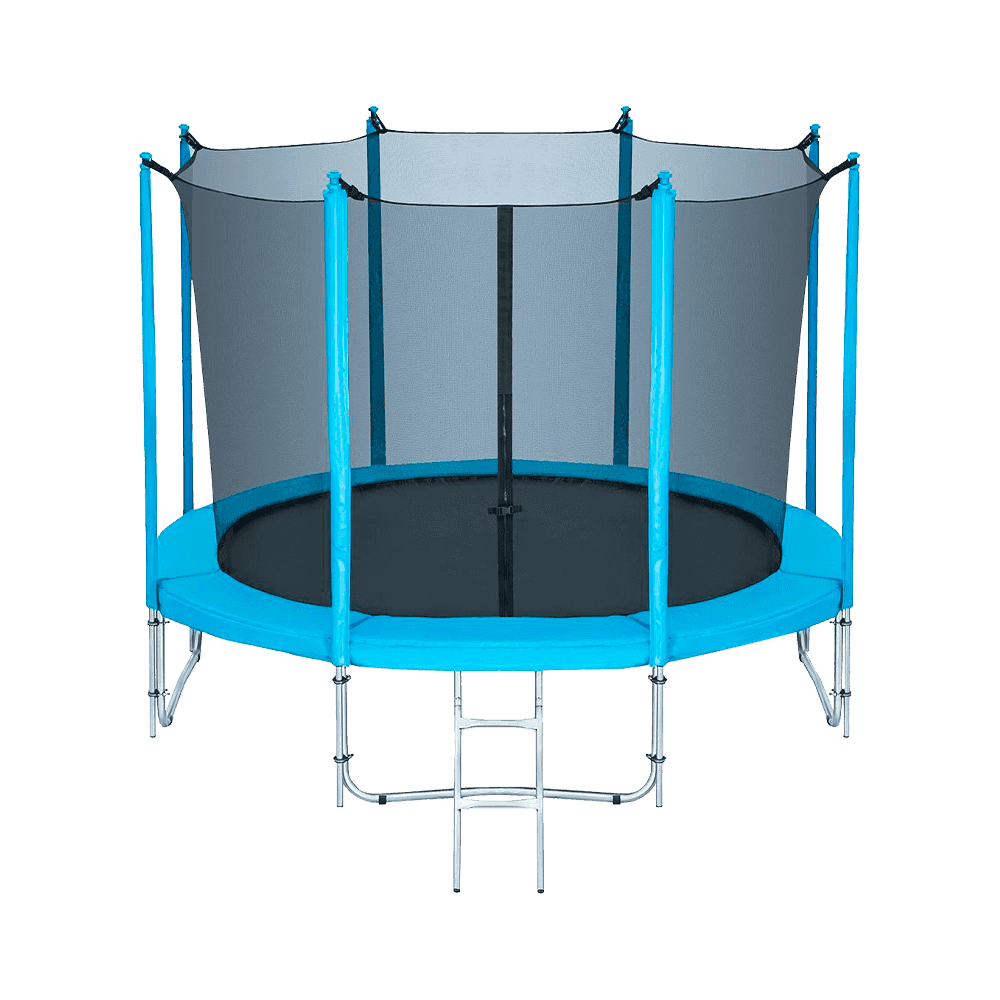
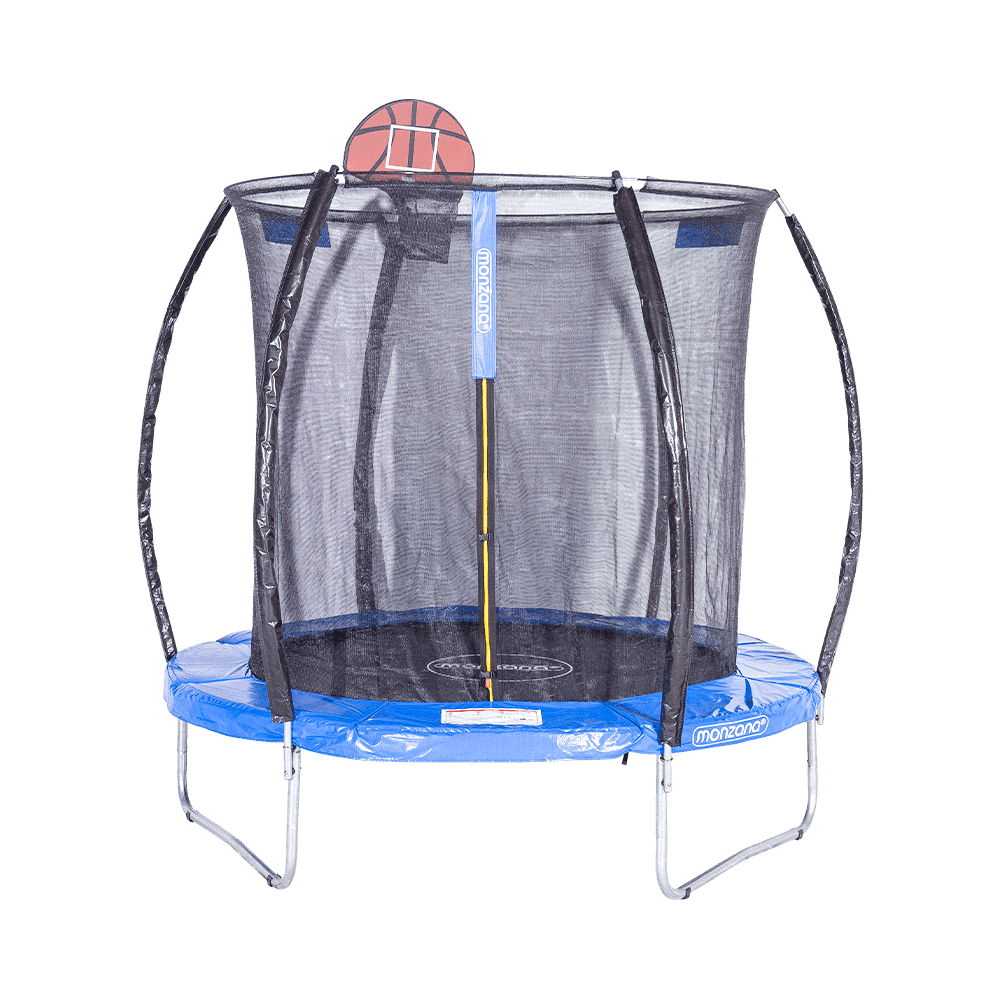
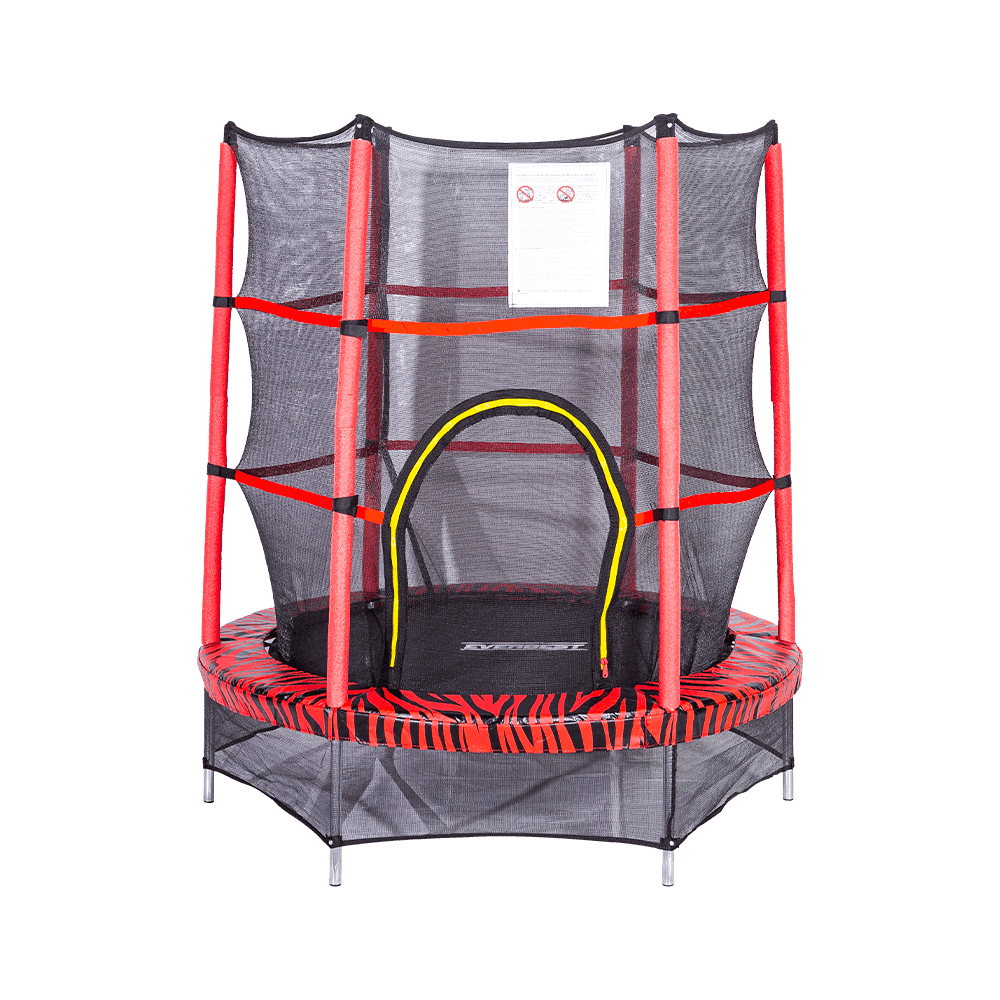
The 8ft polygonal trampoline with enclosure uses a tightly woven polyethylene net that keeps jumpers contained while being soft enough that accidental contact doesn't cause injury. The foam padding covering the frame and springs is PVC-coated for weather resistance — a detail that pays off after the first season outdoors.
Certification labels on trampolines aren't marketing — they represent real testing protocols. EN71 is the European toy safety standard covering mechanical integrity, flammability, and chemical migration. GS (Geprüfte Sicherheit) is a voluntary German mark that goes a step further, requiring third-party auditing of the manufacturer's production process, not just the product. REACH confirms that materials are free from hazardous substances.
For a trampoline used by children, these three together give you reasonable assurance that the product has been tested beyond what manufacturers self-certify. In 2025, the European standard EN 71-14 was revised to update requirements for domestic trampolines specifically — a signal that regulators are paying closer attention to this product category.
An 8ft trampoline suits yards where space is genuinely limited, or families with younger children (roughly ages 3–10) who don't need maximum air height. The polygonal frame helps reclaim usable jumping area compared to a round 8-footer of the same diameter — the flat sides mean the mat fills more of the frame's geometric footprint.
If you have the space and older kids, a 10ft or 12ft round trampoline gives significantly more jumping surface. But for compact backyards or as a first trampoline for young children, the 8ft polygon is a practical, safe choice that doesn't compromise on build quality. Consider also whether a rectangle trampoline might better fit a narrow yard space.
Most 8ft polygon trampolines take two adults about 90 minutes to assemble. A few things that extend the lifespan significantly:
An 8ft polygonal trampoline with enclosure is a compact, well-engineered option for families who want safer, more consistent bounce performance in a smaller footprint. The octagonal frame isn't a gimmick — it addresses a real limitation of round trampolines at this size. Prioritize certified materials, proper padding width, and a high-quality enclosure net, and this trampoline will hold up through years of daily use.
If you have any questions, please fill out the contact form at the bottom of the page and contact us.

Anhui Qidi Fitness Equipment Co., Ltd.
Tel: 0086-563-4676999
Fax: 0086-563-4676999
Mobile:086-15158243539
Email: [email protected]
Address: Dongpo Industrial Area, Zhongxi Town, Ningguo City, Anhui Province China
You are welcome to contact us at any time, we value your feedback and suggestions.
 Previous