

 English
 Deutsch
 русский
Industry News
Mini Trampoline Benefits, Buying Guide & Best Exercises for 2026
Content
A NASA study from 1980 found that rebounding on a mini trampoline is 68% more efficient than jogging — producing similar cardiovascular results with less physical stress on the body. That single finding has driven millions of people to swap their running shoes for a rebounder. If you're still on the fence, here's everything you actually need to know before buying one.
What Makes a Mini Trampoline Different from a Regular One
Mini trampolines — also called rebounders — are compact fitness tools, typically 36 to 55 inches in diameter, designed specifically for controlled bouncing exercises indoors or outdoors. Unlike large backyard trampolines built for high-flying jumps, rebounders are engineered for low-impact cardiovascular and strength training.
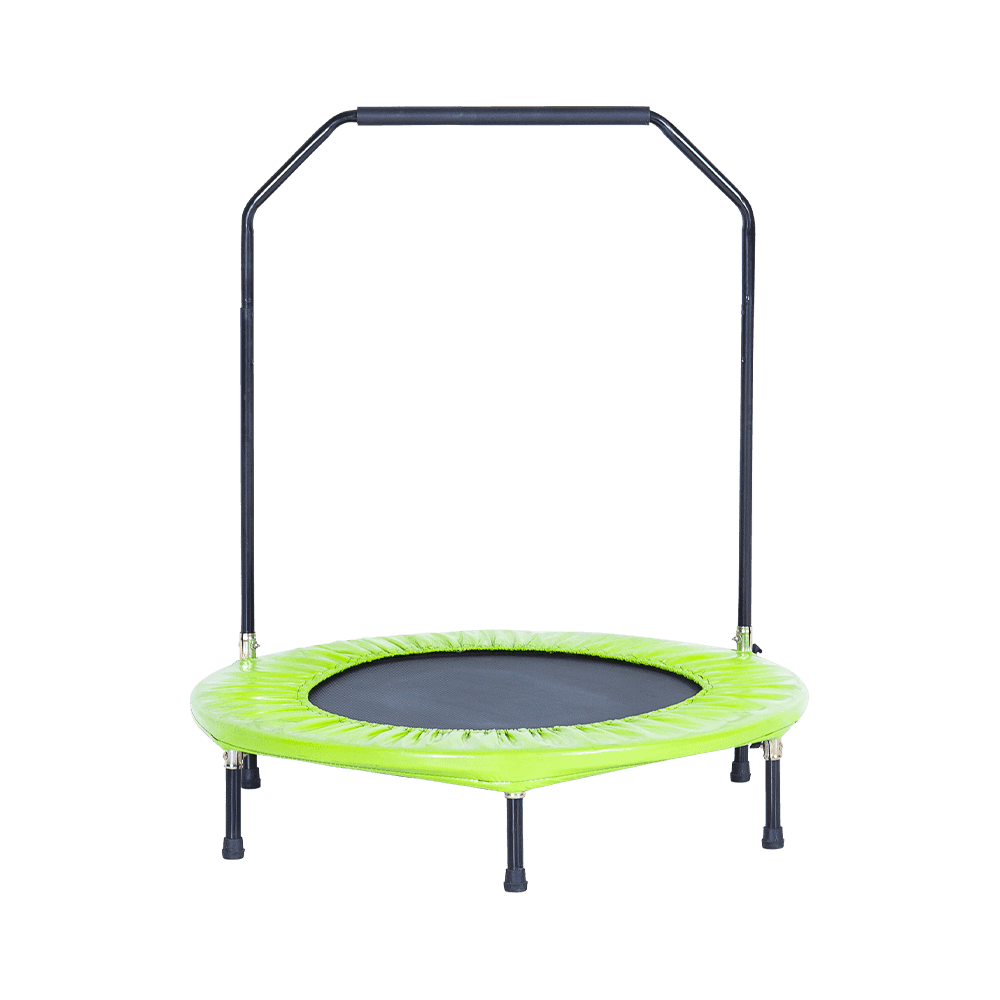
The key difference lies in the spring or bungee system. fitness mini trampolines built for indoor and outdoor use often use elastic bands instead of traditional metal springs — delivering a smoother, quieter bounce that suits apartment living and home gyms alike. When you land, the surface absorbs roughly 70% of the impact, making it dramatically easier on knees, ankles, and hips compared to running on hard floors.
5 Real Health Benefits Backed by Research
1. Cardiovascular Fitness Without the Joint Damage
Ten minutes of bouncing elevates your heart rate into aerobic training zones. The trampoline surface absorbs impact so your cardiovascular system works hard while your joints stay protected — ideal for anyone recovering from injury or managing arthritis.
2. Lymphatic Drainage and Immune Support
Your lymphatic system has no pump of its own — it relies entirely on body movement to circulate. The rhythmic up-and-down motion of rebounding opens and closes the one-way valves in lymph vessels, helping clear metabolic waste and dead cells from the body. Even short daily sessions can meaningfully improve lymph flow.
3. Balance and Coordination
A study by the International Society of Electrophysiological Kinesiology found that 14 weeks of mini-trampoline exercise improved seniors' ability to correct balance before falling by approximately 35%. The unstable surface constantly engages your core and stabilizing muscles — benefits you simply don't get from flat-ground exercise.
4. Bone Density
NASA originally researched rebounding to help astronauts rebuild bone and muscle lost during weightlessness in space. The gravitational loading at the bottom of each bounce — roughly 1.5 times normal gravity — stimulates bone tissue regeneration. A 2024 meta-analysis in the Journal of Sports Sciences confirmed that jump training significantly increases bone mineral density.
5. Calorie Burn and Weight Management
A 150-pound person bouncing for one hour burns more calories than the same person jogging for an hour, according to NASA's research. For those who find traditional cardio tedious, rebounding offers an engaging alternative that doesn't feel like a chore.
How to Choose the Right Mini Trampoline
Not all mini trampolines are created equal. Here are the four specifications that actually matter:
Size and Jumping Surface
Most mini trampolines range from 36 to 55 inches in diameter. A 55-inch mini trampoline offers more room for lateral movements like jumping jacks and side steps, while a 36-inch model fits tight apartment spaces. Measure your floor space before purchasing — you'll want at least 18 inches of clearance on each side.
Spring vs. Springless (Bungee Band) Design
Traditional steel springs provide a firm, responsive bounce, but they produce more noise and can pinch if you land on them. Springless designs using elastic bands — like those with 60 high-elasticity bands on a Φ32mm steel frame — deliver a smoother, quieter bounce that's gentler on joints and better suited for shared living spaces.
Weight Capacity
Check the stated maximum user weight before buying. Most fitness-grade mini trampolines support up to 100kg (220 lbs). If the product doesn't clearly state a weight limit, treat that as a red flag.
Stability Bar
If you're new to rebounding, over 60, or recovering from an injury, choose a model with an adjustable handle bar. Look for multiple height settings — ideally adjustable between 88cm, 98cm, and 108cm — so it suits different users in the same household. The bar dramatically reduces fall risk during the first few weeks of use.
Best Exercises to Start With
You don't need an elaborate routine. These three movements cover cardio, balance, and core in under 20 minutes:
- Health Bounce (Warm-Up): Keep feet on the mat and gently bounce without lifting off. Two to three minutes of this alone stimulates lymphatic flow and warms up joints.
- Jogging in Place: Lift alternating feet while keeping a moderate pace. Sustain for 5–10 minutes for aerobic benefit. Arms can swing naturally or hold the stability bar.
- High-Knee March: Slower and more deliberate than jogging, this targets hip flexors and core stability. Three sets of 30 seconds each is a solid starting point.
Progress by adding duration before adding intensity. Most beginners see noticeable improvements in balance and endurance within two to three weeks of consistent use.
Indoor vs. Outdoor Use: What to Know
Mini trampolines marketed as indoor and outdoor fitness trampolines need to meet different material standards. Outdoor use demands UV-resistant mats, rust-resistant steel frames (look for hot-dip galvanized or powder-coated tubing), and rubber leg caps that grip uneven surfaces. Indoor-only models often skip these treatments to cut costs — don't assume a trampoline rated for indoors will hold up on a patio through a full season of weather exposure.
For most home users, a dual-rated model is the practical choice. You get the flexibility to move it outside on good weather days and bring it in without worrying about premature wear.
One More Thing Before You Buy
Mini trampolines are one of the few fitness purchases that genuinely deliver on their promises — provided you buy one built to a proper standard. Look for products with certifications such as GS, EN71, or EN13219, which confirm the frame, mat, and elastics have been independently tested for safety and durability. A well-built unit used three to four times per week will last years with minimal maintenance.
For buyers sourcing direct or in bulk, exploring the full range of mini trampoline models available for wholesale — including foldable designs, springless options, and models with adjustable handles — gives you the flexibility to match specific user needs without overpaying for features you won't use.
 Previous
Product Consultation
Search
Categories
Recent Posts
If you have any questions, please fill out the contact form at the bottom of the page and contact us.
Related products

Anhui Qidi Fitness Equipment Co., Ltd.
Quick Links
Contact Details
Tel: 0086-563-4676999
Fax: 0086-563-4676999
Mobile:086-15158243539
Email: [email protected]
Address: Dongpo Industrial Area, Zhongxi Town, Ningguo City, Anhui Province China
Come and Contact Us
You are welcome to contact us at any time, we value your feedback and suggestions.
